
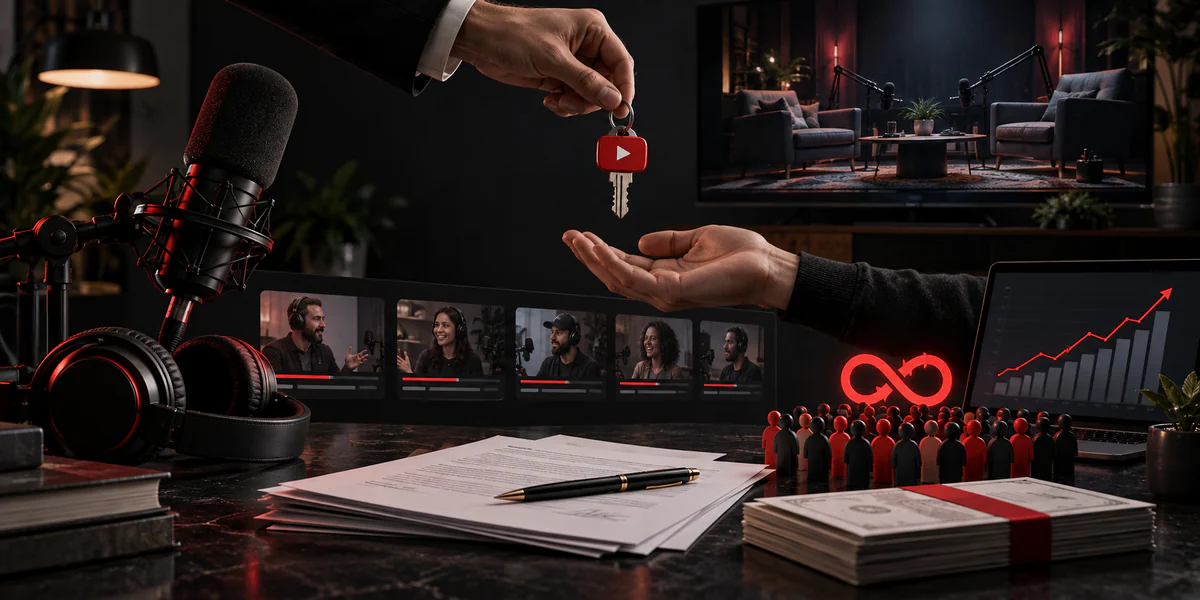
Buying a YouTube podcast channel means acquiring more than a video archive. The real asset may include a host relationship, show name, audio feed, guest pipeline, production system, sponsor inventory, and a returning audience that watches on televisions. Each component needs its own transfer and valuation test.
Why podcast channels deserve a separate model
YouTube reported more than one billion monthly active viewers of podcast content in 2025. It later reported substantial growth in podcast viewing on living-room devices, including hundreds of millions of monthly hours. Review the platform context in YouTube's podcast audience announcement and living-room update.
Large platform demand does not prove that a specific show has a loyal audience. Buyers still need channel, episode, and business evidence.
Identify the complete show asset
List the YouTube channel, show name, trademarks, artwork, domains, social profiles, newsletter, RSS feed, audio-host account, back catalog, raw recordings, release forms, music, templates, and sponsor materials. Mark each item as included, licensed, replaceable, or excluded.
A channel-only deal can lose value if the podcast name, feed, or guest rights stay with the seller. Match the asset schedule to the purchase agreement rather than relying on the listing description.
Measure episode-level durability
Export views, watch time, retention, returning viewers, device mix, and revenue by episode. Split new-release performance from catalog listening after 30, 90, and 180 days. A durable interview library behaves differently from a news show whose demand expires quickly.
Check whether clips and Shorts lead viewers into full episodes. Do not add clip and episode views together without identifying overlap and production cost.
Test host dependence
Compare episodes by host, co-host, guest type, and format. Read comments for evidence that viewers follow a person rather than the show proposition. Review whether the host name or likeness is embedded in branding, sponsor contracts, thumbnails, and the audio feed.
Model a transition with the current host, a limited handover, and a replacement host. If only the first case preserves performance, the host agreement is part of the acquisition value and should be documented.
Audit guest and media rights
Verify guest releases, remote-recording permissions, music licenses, third-party clips, photographs, and distribution rights for video and audio editions. Confirm that old episodes can remain monetized and redistributed after ownership changes.
For shows built on commentary clips, use the copyright claims and strikes guide and review platform originality requirements separately.
Reconcile revenue streams
Separate ads, Premium, sponsorships, memberships, affiliate revenue, merchandise, events, and audio-platform income. Match sponsor invoices with episodes and outstanding deliverables. Deduct host, producer, researcher, studio, guest-booking, editing, clip, and distribution costs.
Use the true channel profit guide rather than valuing gross sponsorship announcements.
Inspect television and audio behavior
Review device type, average view duration, co-viewed metrics where available, and long-session performance. Television-heavy viewing can support premium presentation and longer episodes, but it may require different thumbnails, set quality, and production cost.
Also compare YouTube consumption with the external RSS audience. Confirm that measurement periods align; podcast downloads and YouTube views are not interchangeable units.
Design the handover
Require access maps, production calendars, guest pipeline, sponsor contacts, editorial standards, source files, presets, feed procedures, and a transition plan for public announcements. Run one episode from booking through publication with the buyer's team.
Use the first 30 days after acquisition guide to stage changes without surprising regular viewers.
Buyer decision rule
Value the transferable show system: durable episodes, recognizable brand rights, documented host participation, clean guest permissions, diversified revenue, and a production process the buyer can operate. Discount a channel where the audience, name, and sponsors disappear with one individual.
Podcast acquisition questions
Is the YouTube channel enough to own the podcast? Not necessarily. The name, RSS feed, artwork, domains, contracts, archive, and media rights may be separate assets.
How should old episodes be valued? Measure continuing watch time, revenue, rights, and maintenance costs by episode cohort.
Can the host leave after closing? That depends on the signed agreement. Do not price assumed participation that is not documented.
How this guide is prepared
Social Bidz guides separate seller-supplied claims from evidence a buyer can check. Platform-policy statements should use public platform documentation, while prices and revenue are treated as variable marketplace data rather than promised results.