
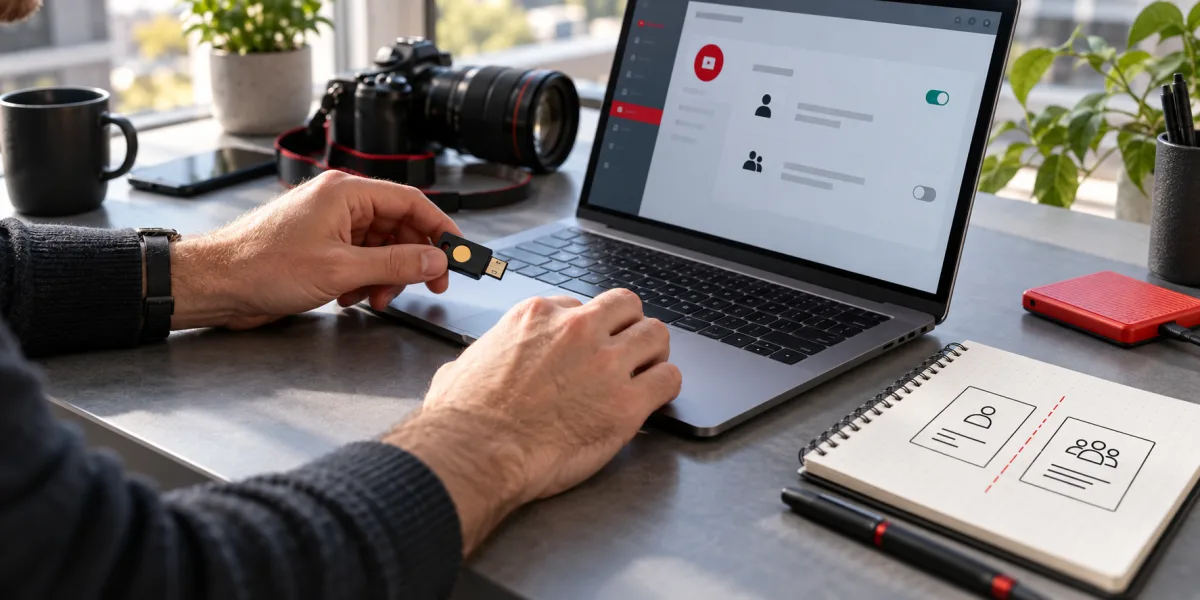
Selling a channel should start with a clear boundary between the asset being sold and the seller's private account. A personal Google Account may also contain Gmail, Drive files, purchases, photos, recovery information and access to unrelated services. Those do not become part of a channel sale simply because the same login was used to manage YouTube.
This guide focuses on that privacy boundary. It does not assume every channel is ready for the same ownership procedure. Check the actual account structure and use the current official instructions for it before planning access changes.
Draw an asset boundary before negotiating
| Included only when documented | Keep outside the sale |
|---|---|
| The identified channel and agreed transferable content | Personal inbox and unrelated messages |
| Named source files and rights the seller can provide | Passwords, backup codes and recovery credentials |
| Specified brand assets or production documentation | Private Drive documents and personal photos |
| An agreed period of channel-related support | The seller's entire personal Google Account |
Put this distinction into the deal discussion early. If a buyer believes the price includes an email address, cloud folder or brand domain, resolve that expectation before accepting the request. A domain inbox operated for the business may need its own documented transfer; that still does not justify handing over unrelated personal mail.
Establish how the channel is held
YouTube provides separate guidance for channel permissions and Brand Account ownership. Team access through Studio is not the same as completing an ownership transfer. Identify the channel and the applicable account structure before choosing the handover steps.
The existing permissions versus ownership guide explains those role distinctions in more detail. For this privacy plan, write down who controls the relevant account today, what can be transferred and which personal services remain under the seller's control. Do not treat an unfamiliar role label as evidence that everything is ready.
Changing channel ownership and moving a channel between Brand Accounts are different actions. YouTube's channel-move documentation warns that an incorrect move can delete the wrong channel. Pause before any Replace or Delete operation and verify the exact source and destination with the applicable guidance.
Live marketplace
Review the asset, not somebody's personal inbox
Listing cards do not establish the channel's account structure. Ask the seller about ownership and included assets before agreeing to a transfer.
469 active listings currently available.



Share evidence with a narrow purpose
Buyers need enough information to evaluate the channel; they do not need unrestricted access to every service attached to your login. Start with dated channel records that answer a specific question. Preserve the channel identity and the relevant date range while redacting unrelated personal data.
For a guided review, agree in advance which pages you will show. Open the relevant channel view before sharing a screen and close unrelated tabs or notifications. If a bank statement is necessary to reconcile a payment, isolate the relevant transaction and remove unrelated account information. Keep the evidence useful without making a private inbox the default data room.
The seller data-room guide covers the broader evidence package. Use a separate list of what was shared, with whom and why, so later questions can be answered without repeatedly exposing the same sensitive material.
Handle credentials as private account controls
A request for a password, recovery phone or one-time sign-in code should not be treated as an ordinary analytics question. Ask what channel-related task needs to be completed and whether an appropriate permission or ownership process can accomplish it.
Use a receiving account that the incoming owner controls and record the agreed transfer identity in the deal. If you are unsure which address or role should be used, resolve that before issuing an invitation. Sending access to a lookalike or mistyped address is not made safe by a familiar display name.
Password managers, security keys and recovery methods remain account controls, not included production assets. Their purpose is to protect the person who owns the account. No buyer needs the seller's private backup codes to inspect the channel's public archive or agree an asset list.
Treat payout accounts separately
A channel transfer does not mean the seller's AdSense account is included. Google's AdSense for YouTube guidance states that transfers of AdSense account ownership are not permitted. Discuss the incoming owner's applicable payout setup separately from the ownership handover.
Do not include private tax records, a personal banking login or unrelated AdSense properties in a folder of channel assets. If the buyer asks how earnings will be associated after transfer, use the existing AdSense transition guide and current platform instructions rather than exchanging financial credentials.
Complete a privacy review at handover
Before completion, compare what was delivered with the written boundary. Check that the buyer has the intended channel access and agreed files, and that your private services were not added by accident. Confirm any continuing support role and its end date instead of leaving ambiguous access indefinitely.
This review should be coordinated with the recorded deal's transfer and protection steps. It is not an instruction to remove people or change recovery controls at an arbitrary point. A useful sale record leaves both parties able to identify the delivered asset, the remaining commitments and the personal information that was never part of the transaction.